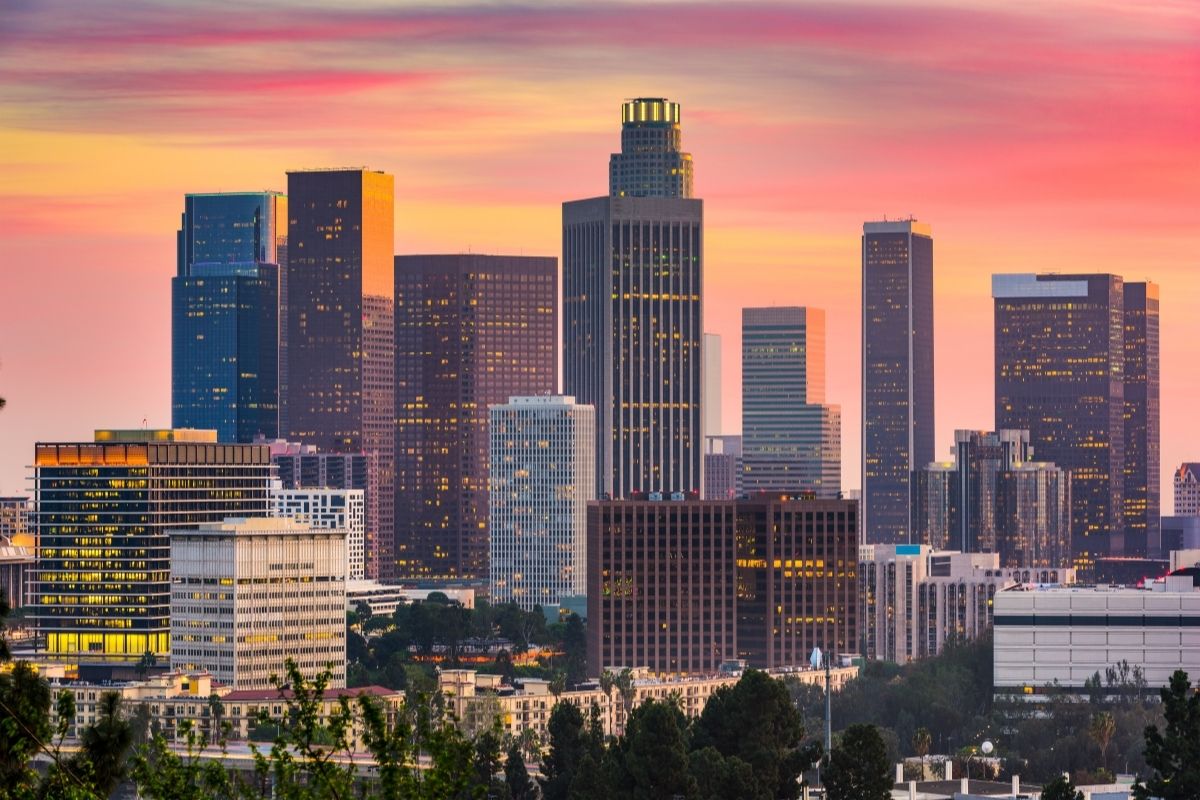
Chinese immigration to the U.S. has rebounded in recent years, with California a primary destination. About one-third of all U.S. Chinese immigrants live in California. In fact, Chinese buyers have become the leading foreign homebuyers in California: between April 2024 and March 2025 they made up 15% of U.S. foreign home purchases (15% in CA alone), paying an average of $1.2 million each (higher than any other country). Many of these purchases are all-cash investment or second-home buys. (Overall, California accounts for 15% of international home purchases nationwide, roughly tied with Florida.)
Even as recent policy and economic headwinds cooled activity (home sales to Chinese nationals fell ~75% from 2017–2018 peak levels), the state’s leading tech and business centers remain magnets: roughly 11% of Chinese immigrants live in the Los Angeles metro area and 11% in the San Francisco metro area. Chinese immigrants in California also tend to be highly educated and affluent (for example, 53% hold a bachelor’s degree), so they seek neighborhoods with premium schools, safety, amenities and growth.
Several key factors draw wealthy Chinese newcomers to specific California cities:
-
Education and Schools: Top-ranked K–12 schools and universities are a major lure. Irvine’s school districts and nearby University of California, Irvine are famous draws. In the Bay Area, Stanford University (Palo Alto) and UC Berkeley attract families, while Los Angeles offers UCLA and USC. Many Chinese parents explicitly cite “top-shelf schools” and competitive classrooms as motivators for moving to Irvine, Arcadia and other districts.
-
Lifestyle and Community: California’s pleasant climate, open spaces and cultural amenities appeal to migrants seeking a high quality of life. Planned communities like Irvine (with parks and clean neighborhoods) and beachfront San Diego are noted for safety and leisure. Established Chinese‐American neighborhoods (San Gabriel Valley in LA, Monterey Park, Cupertino/Palo Alto, etc.) provide familiar cultural institutions (markets, temples, language schools) and social networks. In general, buyers prize fang bian (convenience”) – meaning easy access to work, goods, transport and community.
This stylized image represents fang bian, a concept many Chinese describe as suitability and convenience. For example, Chinese brokers note that tech‐industry proximity and good airports on the Peninsula (near San Jose/San Francisco) embody this value.
-
Safety and Prestige: Low crime and prestigious addresses are important. Irvine, for instance, is routinely cited as “clean [and] safe” with “orderly, suburban living”. Wealthy buyers often pay premiums to live in highly ranked (and well-regulated) cities. In the San Gabriel Valley, the affluent city of San Marino is widely regarded as a “stamp of credibility,” where Chinese buyers are willing to “stretch” to live. In the Bay Area, elite suburbs like Atherton and Palo Alto carry strong name recognition. Chinese realtors say that simply being in Atherton, a small town of big mansions, signals wealth to one’s peers in China.
The image above shows an Atherton welcome sign – one of the “name-brand” towns that Chinese buyers target.
-
Property Investment: California real estate has delivered solid appreciation, which appeals to overseas investors. For example, Orange County cities (including Irvine) were among the nation’s fastest-growing markets in 2023–2024. Foreign buyers, often with large cash reserves, are snapping up homes that can be rented or held as assets. Nationwide, 60% of Chinese foreign buyers treat homes as investments or vacation rentals. In markets like Silicon Valley and Orange County, realtors note significant competition: brokers have seen bidding wars among multiple cash-ready Asian buyers for single-family homes.
Visa and Investment Programs
Many wealthy Chinese migrants enter on specialized visas or investment programs. China leads EB-5 investor visas: in FY2024, 8,311 Chinese nationals (69% of all EB-5 issuances) obtained residency through EB-5 investments. California, with 143 approved EB-5 regional centers (as of mid-2025), is by far the top state for EB-5 investments. (Projects funded by EB-5 Chinese funds include high-profile developments like the Ritz-Carlton/JW Marriott LA and new Silicon Valley hotels.)
In addition, affluent Chinese arrive on H-1B and L-1 work visas for technology and business, or F-1 student visas (China accounts for 25% of U.S. international students). All these channels funnel wealthy migrants into California’s hubs of industry, research and innovation. (For comparison, as of 2023 the U.S. Chinese-born population was about 2.4 million nationwide, of which roughly one-third lived in California.)
Bay Area (San Francisco and Silicon Valley)
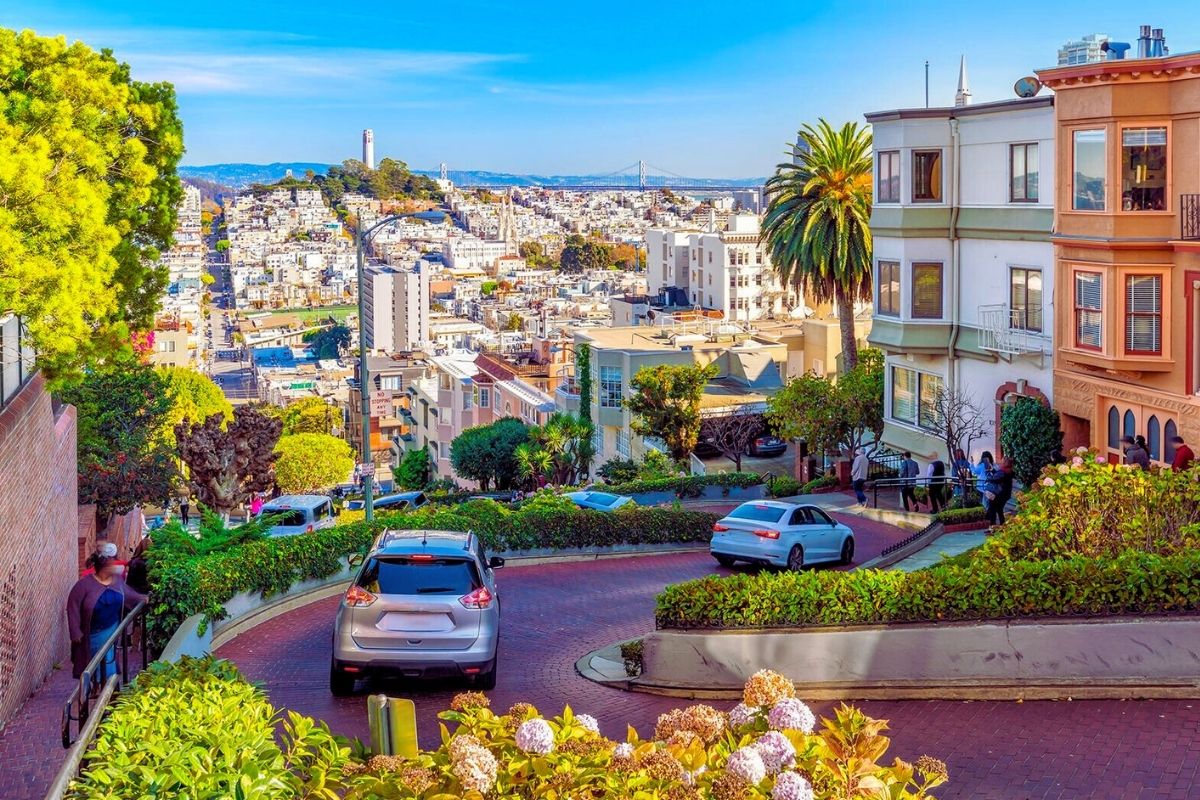
The San Francisco Bay Area – especially Silicon Valley suburbs – is a perennial magnet. The Bay’s major metros (San Francisco and San Jose) together account for about 16% of all U.S. Chinese immigrants, reflecting the region’s technology opportunities and elite institutions.
Tech Jobs & Economy: Companies like Google, Apple and numerous startups draw executives and entrepreneurs from China. Many migrants already have backgrounds in engineering or finance, and seek housing near tech centers. Educational & Cultural Hubs: Nearby universities (Stanford, UC Berkeley) and prestige high schools are a draw.
“Name-brand” Communities: Affluent areas like Palo Alto and Atherton (“coffee can” neighborhoods) are especially sought after for their security and status. Chinese buyers often reference such enclaves by name. For instance, one Bay Area broker reports that a buyer from Shanghai was impressed that “everything is neat and well organized” in these Irvine‐like planned communities.
Bay Area buyers prize the prestige of towns like Atherton (above) and Palo Alto. Local agents note that they commonly hear Mandarin at open houses in these zip codes – about 50% of potential buyers speak Chinese at luxury Peninsula showings. SF city itself is mixed: some Chinese investors develop big projects there, but many prefer suburban mansions. (Indeed, a recent survey found that San Francisco is “largely off the table” for move-in buyers, who favor spacious single-family homes.)
Market Trends: After sliding during travel and capital controls, Chinese demand is rebounding in 2024–25. NAR reports show Californians of Chinese origin have started paying premiums again – the average Chinese buyer price in the U.S. was ~$1.2M in 2024. Local indicators in Silicon Valley show a flurry of all-cash purchases of six- and seven-figure homes, often arranged privately through off-market deals.
Los Angeles Area and San Gabriel Valley
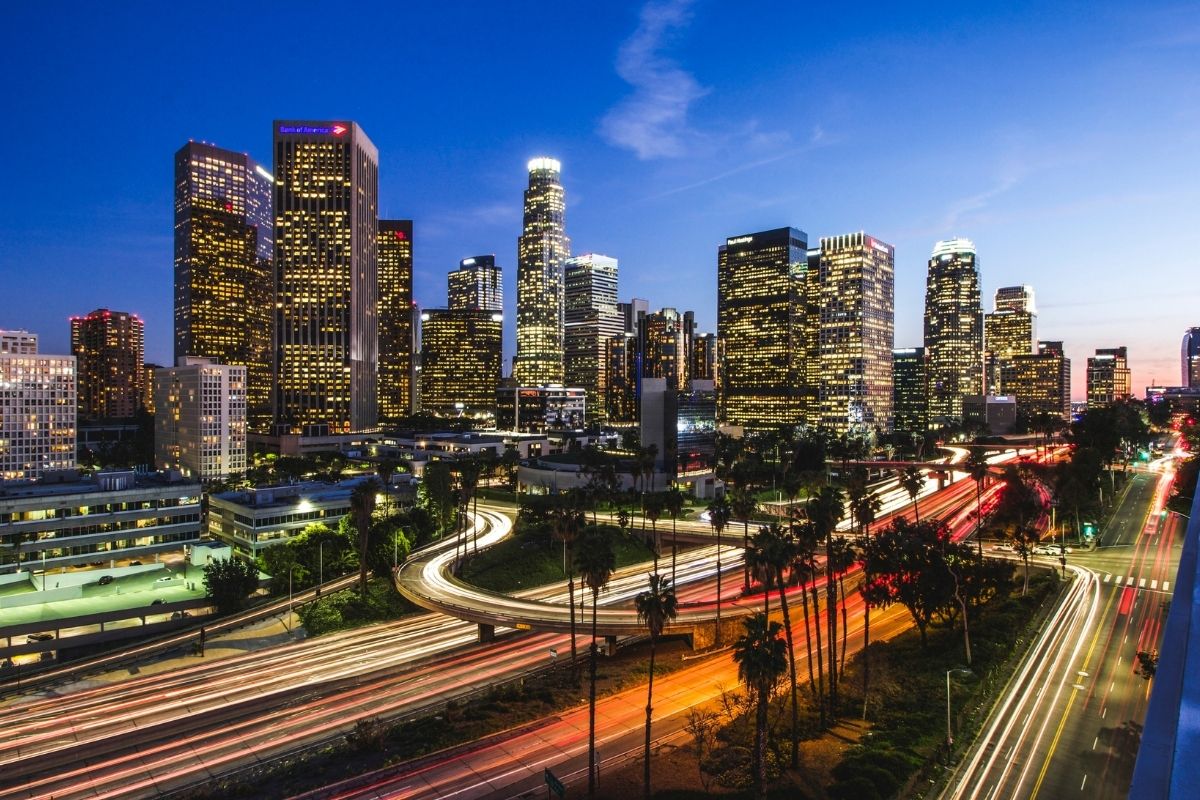
Greater Los Angeles, including its San Gabriel Valley suburbs, has long been a top destination for Chinese families. Los Angeles County alone contains 9% of all U.S. Chinese immigrants, and the Chinese-American share in the San Gabriel Valley is especially high (an estimated 25% Asian population, many Chinese).
Established Enclaves: Cities like Arcadia, San Marino, Monterey Park and Alhambra host vibrant Chinese communities with shops, schools and cultural events. For many newcomers the SGV offers a familiar lifestyle: low-density neighborhoods with a variety of Asian supermarkets and restaurants.
Education & Affluence: This region is home to some of Southern California’s best public schools; for example, San Marino’s school district consistently ranks among the nation’s elite. Chinese buyers have been willing to pay high prices for prestige homes there (“it’s a stamp of credibility,” San Marino brokers say).
Jobs & Entertainment: Los Angeles also offers business opportunities (media, tech, finance) and an international airport, which many Chinese cite as convenient. Though the overall LA housing market is relatively soft today, luxury home values in top zip codes remain strong. In fact, a recent report noted that San Marino was the only elite LA suburb whose median home price held above its 2008 level during the last crash.
Recent Trends: Anecdotal evidence suggests Asian buyers are again active in upscale LA. For instance, realtors report that wealthy buyers from China have entered bidding wars in Beverly Hills and Westwood, often competing with local Chinese Americans. Foreign purchase data also shows California behind Florida as the top draw for global buyers, with Los Angeles as a prime market. (A 2024 NAR survey found California #2 state for foreign buyers, with L.A.-area sales continuing to account for a significant share.)
Orange County (Irvine)
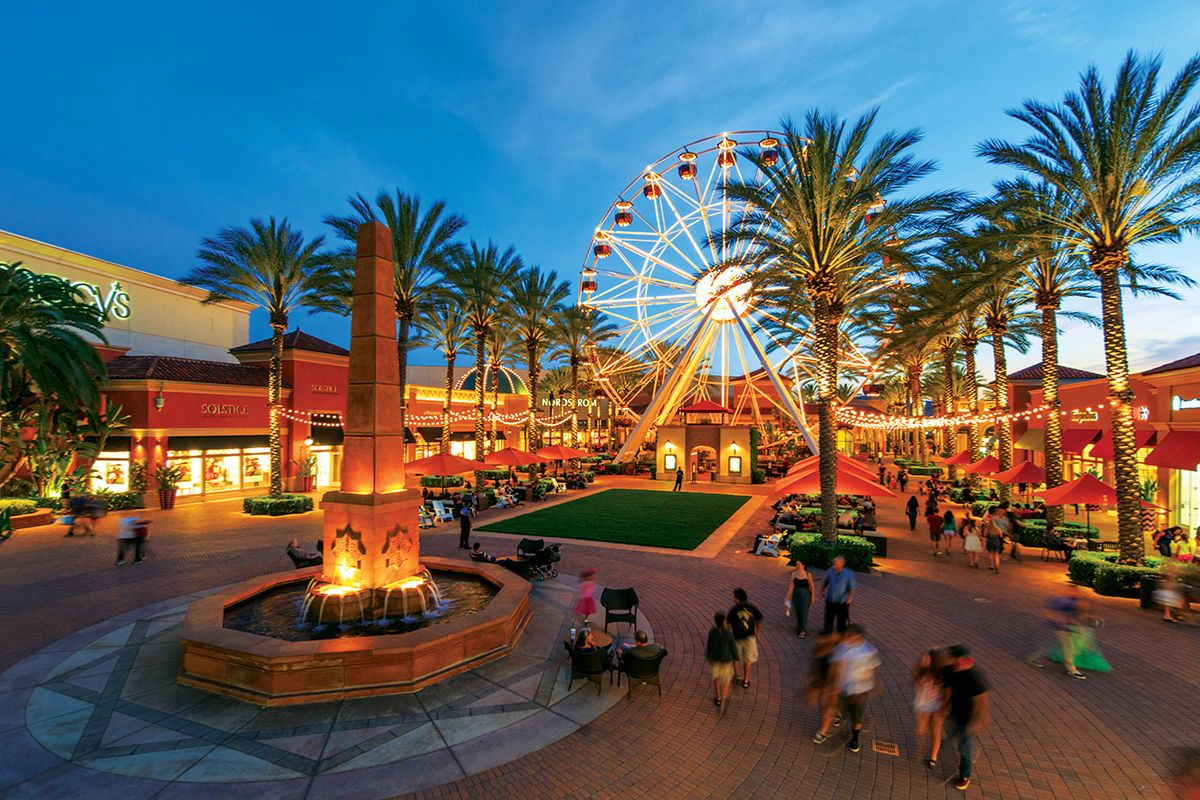
Orange County’s master-planned cities have seen a surge of Chinese buyers. Irvine has the largest Chinese/Asian community in the county – as of 2024, about 44% of Irvine’s population is Asian (with nearly 40% foreign-born, mostly from Asia).
Schools & Planning: Buyers often cite Irvine’s renowned schools, low crime and orderly neighborhoods. The city was designed in villages with ample parks and new homes; its Irvine Company housing and local governance keep neighborhoods highly maintained. “It’s such a clean, safe city,” says one real estate consultant.
Economic Growth: Irvine is also a growing employment center (tech and healthcare jobs) and home to UC Irvine. This creates demand from middle-class immigrants and professionals.
Lifestyle & Community: Irvine has numerous Asian cultural institutions (the South Coast Chinese Cultural Center, Chinese language schools, etc). Many Chinese families live in proximity and socialize in Mandarin. In real estate, Irvine has been a leader: by mid-2024 it was the hottest housing market in the U.S., with local home prices climbing fastest nationwide. Agents report that foreign buyers – largely from China or Taiwan – often pay all-cash and are undeterred by interest rates.
One broker observed: “You could talk to a Chinese or Korean person and they would know Irvine. They may not even know California, but they know Irvine”. In short, Irvine embodies many of the key pulls – schools, safety, jobs, community – making it a top draw for wealthy Chinese moving to California today.
San Diego
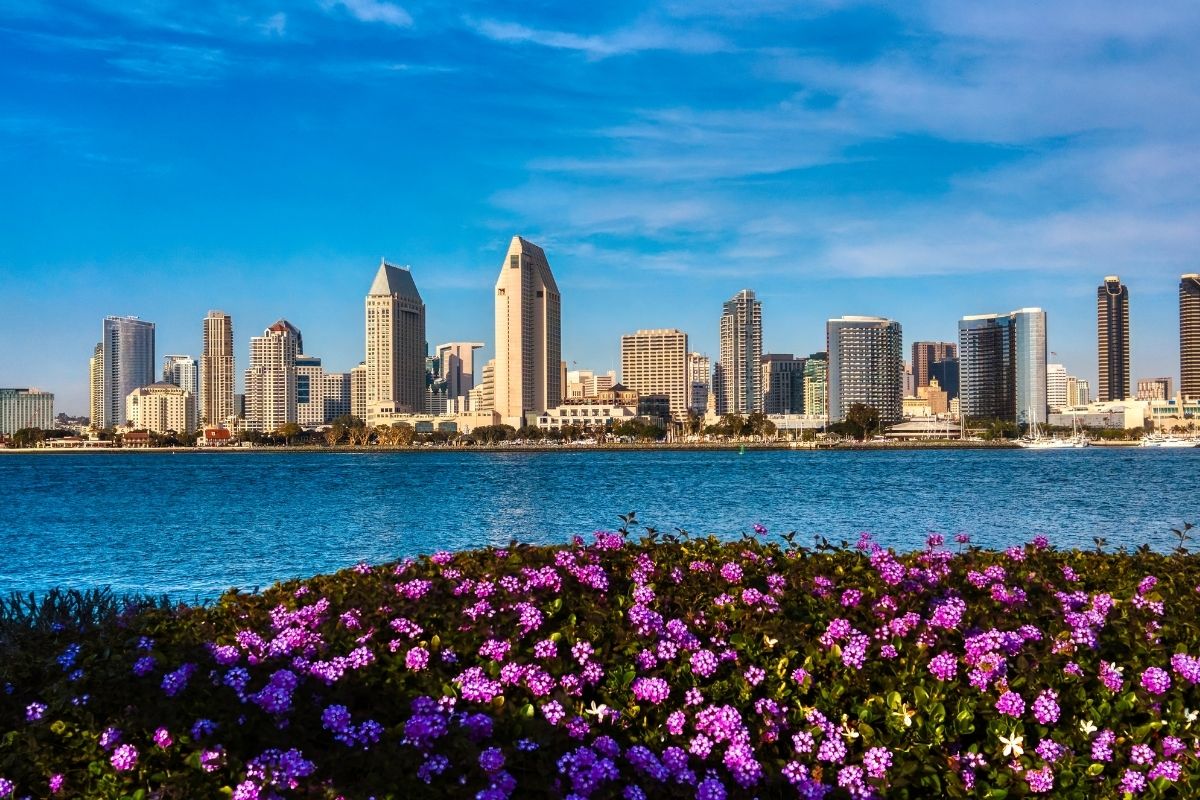
San Diego is a rising destination for Chinese buyers thanks to its climate, universities and international ties. The county’s AANHPI population exceeds 500,000, including about 59,000 Chinese Americans. (San Diego hosts one of the few Chinese consulates on the West Coast, reflecting its Asia-Pacific orientation.)
Climate & Lifestyle: San Diego offers beaches, year-round sunshine and leisure amenities that attract affluent newcomers. The presence of UC San Diego and a growing biotech industry also draws skilled families.
Safety & Quality of Life: The city is known for its relatively low crime rate and high livability rankings.
Investment Appeal: Southern California realtors note that San Diego’s market is benefiting from the overall national rebound in foreign demand. For example, a San Diego Realtors report in 2025 highlighted that 15% of international homebuyers in the U.S. came from China, often paying top dollar for homes.
Locally, agents see a steady trickle of Chinese and other Asian investors eyeing vacation properties and rental units. While San Diego’s Chinese community is smaller than LA’s or the Bay’s, the city’s strong fundamentals and global orientation make it an increasingly popular secondary market for wealthy Chinese buyers.
Summary of Top Cities and Appeal Factors
| City/Area | Chinese Community | Key Appeal Factors |
|---|---|---|
| Los Angeles (LA County) | L.A. Metro hosts ~9% of U.S. Chinese immigrants. Historic enclaves in the San Gabriel Valley (Arcadia, San Marino, Monterey Park) are ~25% Asian. Robust Chinatowns and communities provide cultural support. | – Entertainment, tech and business jobs. – Top universities (UCLA, USC) and prestige schools (San Marino, South Pasadena). – Warm climate and international airport. – Luxury housing markets (Beverly Hills, Pasadena) with steady appreciation. |
| Bay Area (SF/SV) | San Francisco–Oakland Bay = ~11% of U.S. Chinese immigrants; Silicon Valley (Santa Clara/San Jose) ~10%. Dense Asian communities in Cupertino, Milpitas, Fremont; notable Chinatowns. | – Tech economy and venture capital wealth. – World-class universities (Stanford, Berkeley, UC) and high-skilled jobs. – Elite suburbs (Atherton/Palo Alto, Los Altos) prized for prestige and security. – High-quality life (parks, harbor) and international connections (SFO, SJC). |
| Orange County (Irvine) | Irvine itself ~44% Asian (2023). Large Taiwanese/Chinese communities in Irvine, Tustin, Aliso Viejo, etc. | – Master-planned, family-friendly city with top-tier public schools (ranked nationally). – Low crime, clean neighborhoods, many parks and amenities. – Growing tech/healthcare job centers (and UC Irvine). – Rapid homebuilding; among fastest home price gains in U.S. |
| San Diego | San Diego County ~59,000 Chinese Americans (2024). Smaller communities around Mira Mesa, UTC, Carmel Valley. | – Mild climate, beaches, outdoor lifestyle. – Major universities (UCSD, SDSU) and biotech firms. – Good schools (Torrey Pines schools, La Jolla). – Growing foreign interest (Chinese buyers make up a large share of recent international purchases). |
Each of these regions combines strong Chinese or Asian-American networks, high-quality K–12 and higher education, desirable lifestyles (climate, space, safety), and solid real estate markets. Recent data underscores that wealthy Chinese buyers (often paying all-cash) are gravitating to precisely these features.