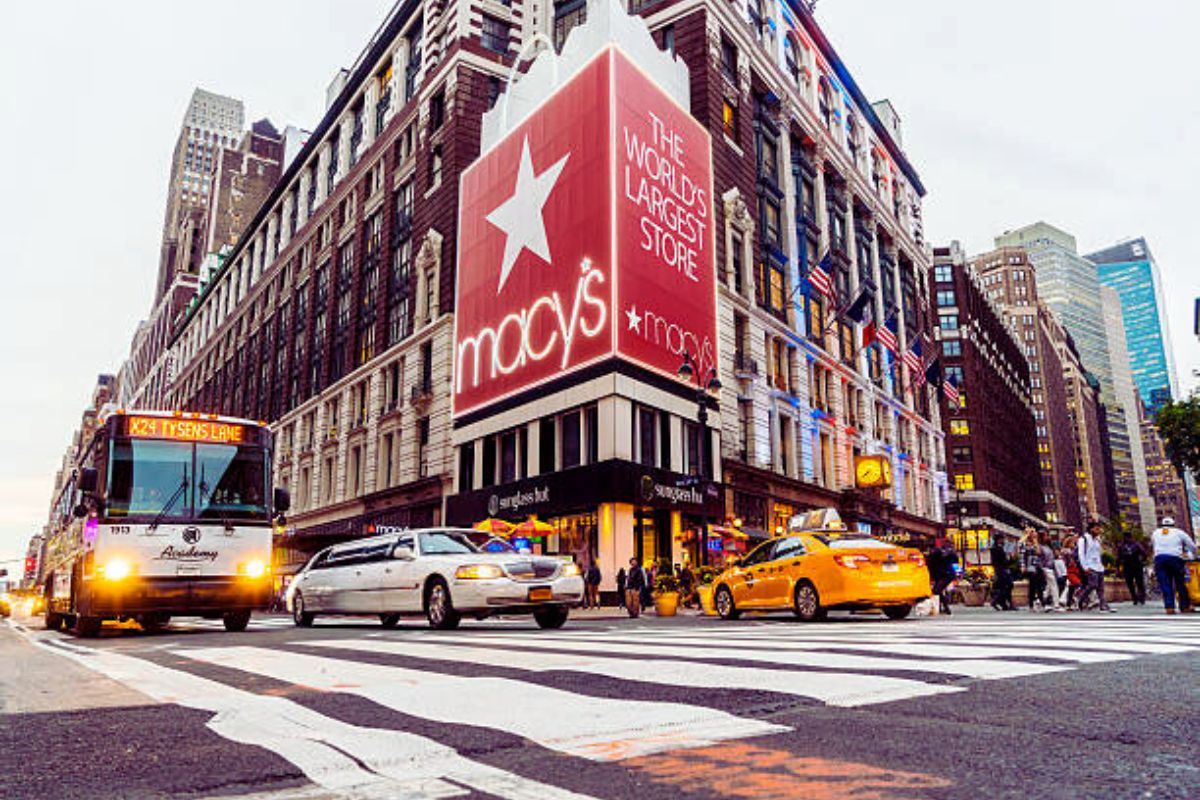
Macy’s iconic Herald Square flagship store in New York City. The retailer confirmed it will shutter 66 Macy’s stores in 2025 as part of its new “Bold New Chapter” turnaround plan. These planned closures follow a round of five store shutdowns announced for early 2024 (including locations in San Leandro, CA; Simi Valley, CA; Tallahassee, FL; Lihue, HI; and Arlington, VA). Macy’s says the cuts target underperforming outlets so it can reinvest in higher-performing “go-forward” stores; affected employees will be offered severance or transfer options.
In January 2024, Macy’s quietly announced it would close those five stores and trim about 3.5% of its workforce (roughly 2,350 jobs). Chief Financial Officer Adrian Mitchell told analysts that the shuttered locations together generated less than 10% of Macy’s sales. Macy’s framed the cuts as a necessary step to streamline its mall-based business amid weak demand and shifting consumer preferences.
Macy’s Herald Square flagship store in Manhattan (billed as the “World’s Largest Store”). Macy’s confirmed that 66 stores will close in 2025, spanning at least a dozen states. The list includes both full-line department stores and smaller-format shops – for example, Macy’s at Mesa, AZ’s Superstition Springs Center, and outlets in California’s Sacramento, Citrus Heights and Chula Vista malls.
Furniture galleries and Market by Macy’s boutiques are also on the chopping block (for instance, Macy’s at Boynton Beach Mall in Florida and a Macy’s Backstage store in Newark, NJ were named). These closures are part of Macy’s three-year plan to shutter roughly 150 underproductive stores through 2026 while focusing investments on its core 350 locations.
Company executives stress that only underperforming stores are being cut. CEO Tony Spring said in January that while “closing any store is never easy,” Macy’s must eliminate weaker outlets to “focus our resources and prioritize investments” in the stronger remaining stores. He noted that go-forward locations have shown improved sales and customer satisfaction after being refreshed.
The Bold New Chapter strategy also calls for growth in Macy’s premium and off-price brands – the company expects to open roughly 15 new Bloomingdale’s stores and 30 Bluemercury outlets by 2026 even as the Macy’s chain shrinks.
This latest downsizing builds on years of Macy’s restructuring. In early 2020 the chain announced plans to close about 125 stores over three years (roughly 20% of its fleet), though it ultimately shuttered around 80 Macy’s locations during that campaign. Since then, Macy’s has been emphasizing digital sales growth and smaller “Market by Macy’s” shops as key priorities.
Nevertheless, Macy’s and its department-store peers continue to feel pressure: industry data show over 7,100 U.S. store closures announced through late 2024, a 69% jump from the prior year. Macy’s leaders say the new closures are necessary to stabilize the business after a year of flat or declining sales.
Local impacts are already being felt. Macy’s said employees at its San Leandro Bayfair Center store (about 60 people) will receive severance and can transfer to nearby locations. However, the announced 2,350 job cuts include roles at many stores and corporate offices nationwide. A Macy’s spokeswoman told the San Francisco Chronicle that closing a store is “always a difficult decision,” but reaffirmed the chain’s commitment to serving customers through its remaining stores and online channels.
Community leaders at affected malls have expressed concern about losing a key anchor tenant, warning that it may reduce foot traffic; Macy’s says it will use the savings to improve its digital platform and the shopping experience in its core stores.
Macy’s has posted the full list of 66 closing stores on its investor relations website, and liquidation sales are now underway (typically running 8–12 weeks) at those locations. The company expects to complete the closings in early 2025, leaving around 350 full-line Macy’s stores nationwide.
Management says the retailer will then be better positioned for growth, focusing on its remaining stores, loyal customers and e-commerce business as the retail landscape continues to evolve.