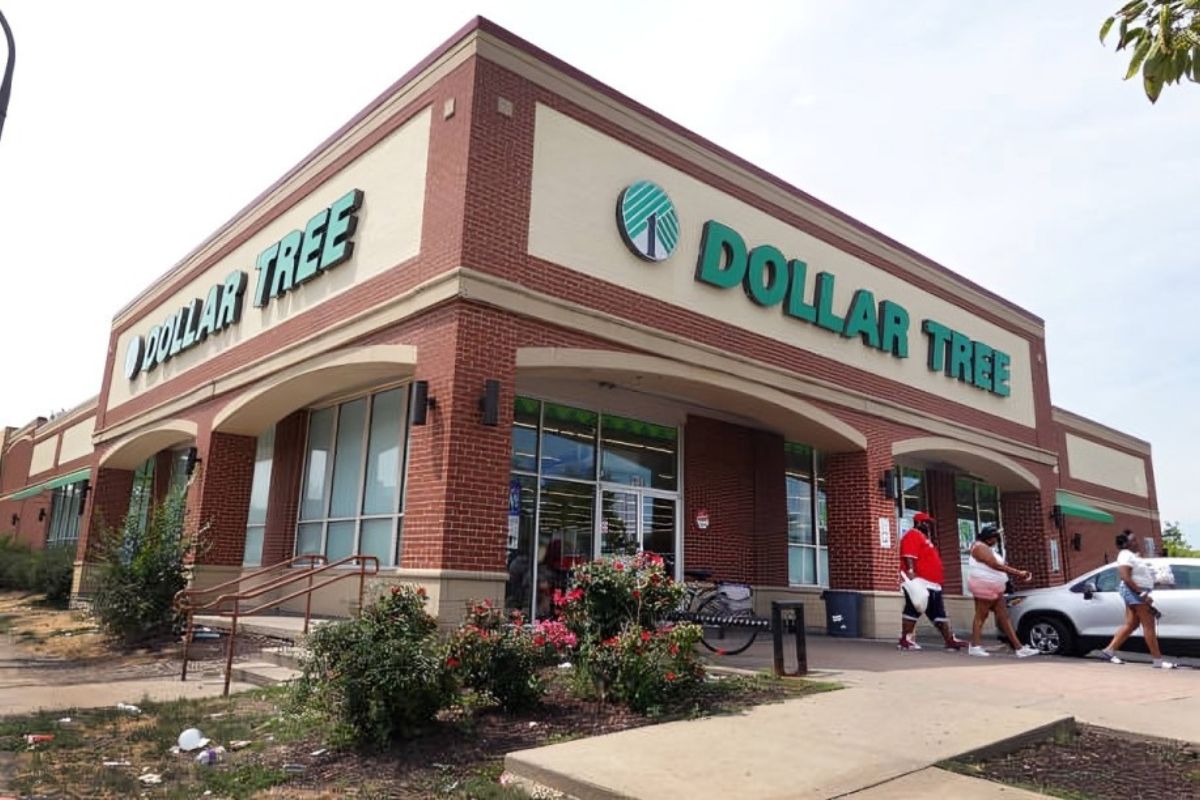
The Old Dollar Tree Pricing Model
For many years, Dollar Tree’s brand was based on a simple promise: everything in the store cost only $1. The brand and shopping experience were defined by this set price point, which was shown on the famous green-and-white “Everything’s $1” signs. Macon Brock, the creator and subsequently CEO of Dollar Tree, termed the dollar-only idea “sacred” and said that giving up on it would mean losing the chain’s specialty. Dollar Tree was the last large discount store to stick with a $1 concept for 35 years. This precise price made it easy to choose what to buy and gave clients with limited budgets peace of mind.
Moving to $1.25: Breaking the Buck
Dollar Tree officially “broke the buck” in late 2021 when it raised the price of most things to $1.25. The corporation had been secretly trying out higher prices that year, and it disclosed the adjustment in its quarterly earnings report in November 2021. Michael Witynski, the CEO, said that raising the price to $1.25 would allow Dollar Tree to bring back bigger or better products that didn’t meet the strict $1 cap. This would also help restore profit margins to their traditional mid-30% range. He said he would “stand by the $1.25 price to keep things simple” for customers, even though other outlets started offering other price levels.
Why Prices Go Up
Dollar Tree leaders said that a number of cost factors rendered the $1 model unable to keep going. Some of the most important reasons for the change were:
Inflation and growing costs: Dollar Tree’s very tight margins had been stretched by years of inflation and rapidly rising transportation, gasoline, and labor costs. By keeping everything at $1, the chain was able to cover these costs.
Assortment limits: The $1 limit made it hard to sell larger or better-quality products (like name-brand food packages) without losing money. Changing the price to $1.25 made more options available.
Pressure from investors: activist shareholders and analysts had encouraged the corporation to update its prices to boost sales and earnings.
In sum, Dollar Tree raised its base pricing because of rising inflation and supply chain expenses, not because of a lack of demand.
How Customers and the Market Reacted
Many longtime consumers were unhappy with the change to $1.25. There were a lot of angry comments and viral videos on social media. People who were unhappy with the store wrote things like “sick to my stomach” and even called it “$1.25 Tree” in protest. Coresight Research did a survey of stores in January 2022 and found that Dollar Tree consumers dropped sharply shortly after the price increase. Visits for non-food items were down roughly 6% in the first week of January compared to the previous two weeks. This reduction was not apparent at competitors like Walmart or Dollar General. Analysts said that rising costs could mean smaller shopping baskets and fewer customers for Dollar Tree’s main budget-conscious clientele.
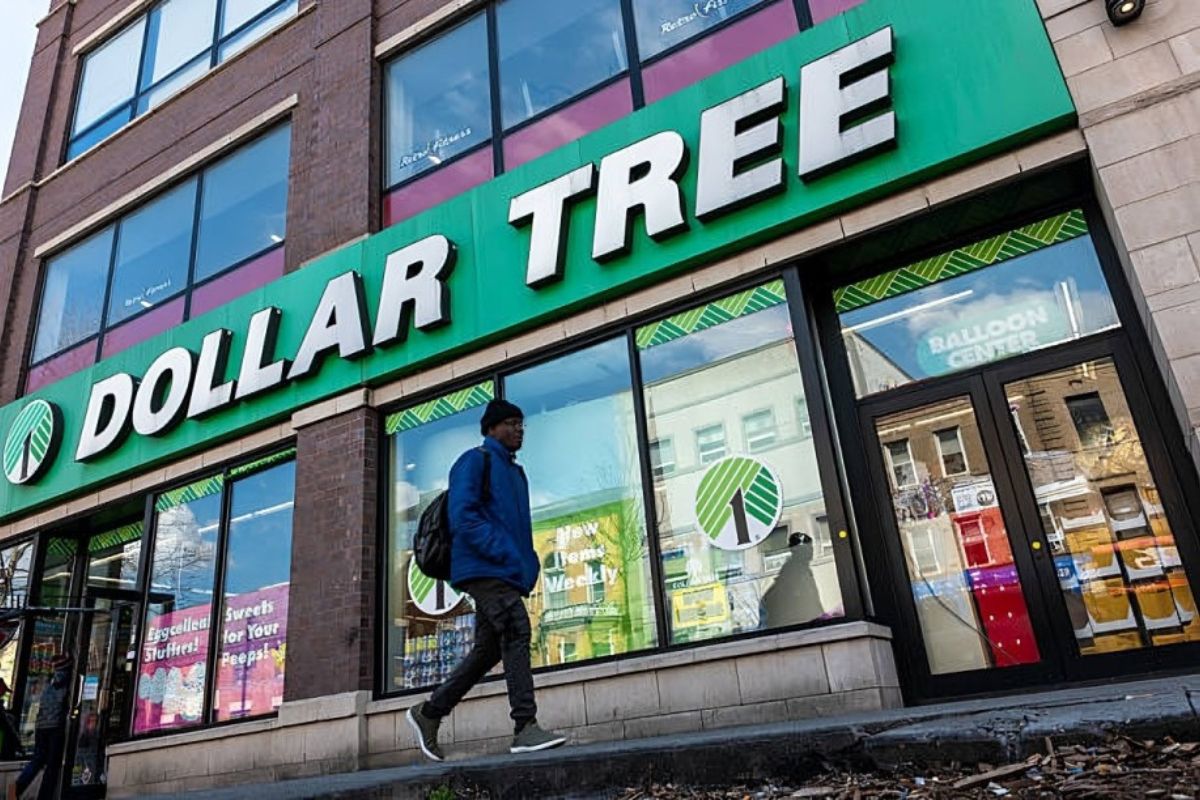
Some people, on the other hand, said that a price of $1.25 was still a good deal. When dollar-store customers saw workers putting new $1.50 stickers over old price tags in the middle of 2025, they had diverse reactions. One viral TikTok had many saying they would shop somewhere else, while others pointed out that even $1.50 was still cheaper than similar things at other stores. The business has endeavored to address these issues as best it can. Witynski and his successor, Mike Creedon, both stressed the importance of keeping most items at or below the new base price to keep customers’ perception of value.
Growing to $3, $5, and more
Dollar Tree used a multi-price-point technique to offer more items after setting a base price of $1.25. In 2022–2023, it added a new “Dollar Tree Plus” area with some items that cost $3 and $5. The corporation expected to quickly add to this selection. For instance, they said that by 2024, around 5,000 locations would sell these higher-end goods. The official annual report says that the multi-price assortment started with $3 and $5 things that people could choose to buy, and it eventually grew to include frozen and refrigerated foods that cost $3 to $5.
By the middle of 2023, Dollar Tree had lifted its price limit again. Rick Dreiling, the CEO, told investors that the chain was adding items at prices up to $5 (up from the previous ceiling of $1.25) while still retaining most things at cheap pricing. Then, in early 2024, Dollar Tree said that the highest price will be $7. By then, hundreds of new items, such name-brand meals, pet supplies, and tools, had been added, all with price tags of $3, $4, $5, and much more. Dreiling said, for example, that “over 300 items” would be marketed for $1.50 to $7 in the next year. Even with these new items, most of Dollar Tree’s stock is still at or below $2. Creedon said that roughly 85% of the items are under $2, with the rest being in higher price ranges.
Recent Price Increases and Plans for the Future
Dollar Tree kept changing pricing after 2024. Around the middle of 2025, the corporation secretly raised the prices of some $1.25 goods to $1.50. Customers said they saw circular red stickers over previous tags, and Business Insider confirmed that numerous kitchen and home items were being reset to $1.50 in June 2025. The corporation indicated that temporary tariffs were partly to blame for this adjustment; it said that higher import levies in early 2025 cost them $70 million. Management made it clear that any future price hikes would be “strategic,” meaning they would focus on adding even more products that cost more than $1.25 instead of raising prices across the board.
Dollar Tree has said that higher pricing levels would keep going up in the future. Creedon said that the mix of prices will become “meaningfully higher” than it is now, which means that there will be more items in the $3–$7 (and even $9) range. This plan seems to be working: in the third quarter of 2025, Dollar Tree had net sales of $4.7 billion, which was a 9.4% increase from the previous year, and same-store sales growth of 4.2%. The company said that a lot of this growth was due to the larger selection. So far this year, net sales are up 11%, thanks to substantial rise in “average ticket” sales, which are driven by higher-priced goods. Investors seem to have backed the change, as Dollar Tree boosted its full-year sales and earnings guidance based on this performance.
Long-Term Plan and Viewpoint
Dollar Tree is trying to be a “value discovery” store for all kinds of shoppers with its new 3.0 store concept. Creedon says that today’s Dollar Tree is “a popular place for a wide range of shoppers,” from families on a budget to people with middle-class incomes who want to buy gifts. The chain wants to blend its image as a store with a lot of value with one that appeals to a wider range of customers by keeping about 85% of its items at low costs (≤$2) and adding premium tiers for the rest. The corporation has already changed hundreds of stores to the multi-price structure (646 in the third quarter of 2025 alone) and wants to quickly spread that to all of its ~9,300 outlets.
To deal with the difficulty of having several price levels, Dollar Tree is also putting money into technology (like AI-driven shelf management) and improvements to its supply chain. In short, what started out as a hesitant deviation from the $1 pledge has become a key part of the plan. Management thinks that a flexible, tiered pricing approach will boost sales, raise profits, and attract people who would otherwise buy at Target or supermarkets. People now see the move away from “Everything’s $1” as a long-term competitive edge that will help Dollar Tree stay relevant even as prices go up and people’s shopping habits change.