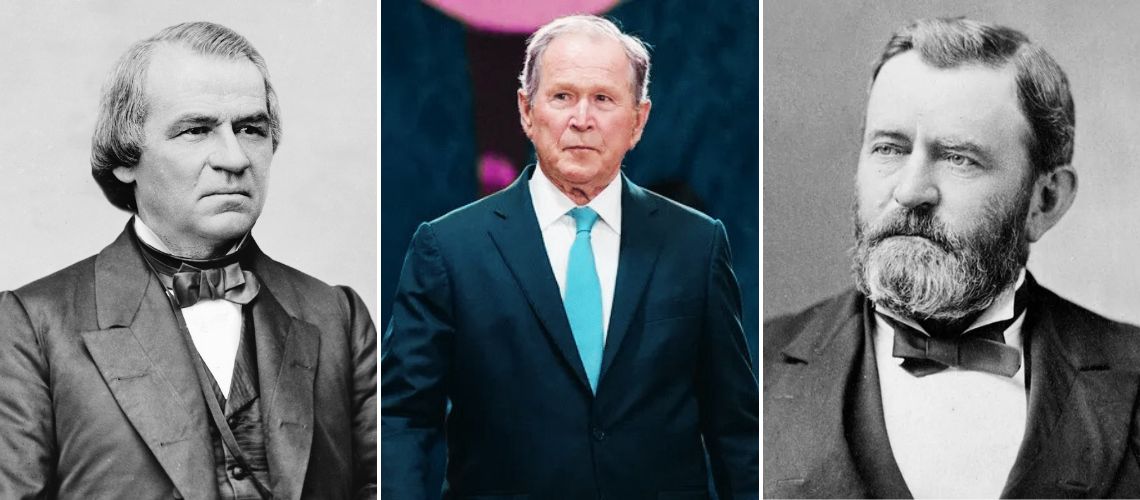
Few U.S. presidents ever took an official IQ test, so claims about their intelligence are necessarily indirect. As Dean Keith Simonton observes, it has become “popular on the internet to debate the IQ of the incumbent president”– yet in reality “few if any U.S. presidents can claim a certified score on an IQ test, and the vast majority … died before taking such a test was even possible”.
Researchers therefore rely on at-a-distance historiometric techniques. For example, Catharine Cox Miles (1926) computed IQs from presidents’ childhood milestones (using the original IQ definition MA/CA×100), while more recent studies extract personality descriptors from biographies.
In one approach, experts coded anonymous biographical excerpts for adjectives like “intelligent,” “curious,” and “inventive,” yielding an “Intellectual Brilliance” factor. Such methods (in effect, substituting expert judgment for direct testing) allow researchers to estimate relative intelligence of presidents across history.
Estimated IQ Rankings of Presidents
Using these indirect methods, scholarly analyses consistently find presidents to be well above average in intelligence. For instance, a Britannica blog summarizing Simonton’s work notes that presidents average around IQ 145 (well above the 99th percentile). Even the “lowest” presidents score above the population mean: George W. Bush’s estimated IQ (~125) is “well over” 100.
In Simonton’s 2006 study of all 42 presidents to George W. Bush, every president’s estimated IQ exceeded 110, with most in the 130–160 range. John Quincy Adams led the list (≈169), followed by Jefferson (~154) and JFK (~151), whereas the lowest estimates were around 120–124.
For example, Grant’s composite IQ was roughly 120 (using one standard scale), and Monroe’s and Harding’s were about 124 (Simonton’s full analysis shows all four of Grant’s imputed scores between 110 and 130.) These rankings imply that even the president with the “lowest IQ” is still well above average.
How Internet lists can differ from scholarly findings. One popular chart ranks George W. Bush and Andrew Johnson at the bottom of a “Least Intelligent Presidents” list. But such compilations are not based on documented evidence.
By contrast, historiometric estimates do not single out Bush or Johnson as uniquely low (Bush’s IQ was estimated ~119, higher than Grant’s ~120 and Johnson’s was not the lowest of any era). In fact, Simonton’s data put Ulysses S. Grant at the very bottom of the IQ scale among presidents.
In short, rigorous studies find Grant’s IQ to be lowest (around 120) and place others like Monroe and Harding slightly above him; any Internet ranking claiming a different “dumbest president” should be viewed with skepticism.
Who Is the “Lowest IQ” President?
In the academic estimates, Ulysses S. Grant consistently emerges with the lowest IQ score of any U.S. president. For example, historian Thomas Reeves notes that in Simonton’s preferred column of results, “the lowest IQ belonged to Ulysses S. Grant (130)”.
(Other measures in Simonton’s table place Grant even lower, with one childhood-based IQ as low as 110.) Thus, by Simonton’s reckoning, Grant’s IQ is slightly below that of James Monroe or Warren Harding (~124). Importantly, these numbers are relative. An estimate of 120 still places Grant well above an average person, reflecting only that all presidents studied were from the high end of the intelligence distribution. No credible study gives a president an IQ below the normal range.
In short, Grant is generally reported as having the lowest estimated IQ (≈120) among presidents. But historians caution that such figures are best seen as rough gauges, not precise measurements. All U.S. presidents were highly educated and intelligent by ordinary standards. As one analysis notes, even a below-average president score (like Bush’s) is “well over” the population mean. Thus the emphasis on a “lowest IQ” president is more about ranking than absolute ability.
Controversies and Source Credibility
Discussions of presidential IQ have often been entangled with myths and partisan claims. In 2001 a widely circulated email hoax declared that President George W. Bush had an IQ of 91 – “the lowest of all presidents” – citing dubious data. Fact-checkers (and even The Guardian) quickly debunked it: Bush’s actual test scores were never released and the report was false.
Similarly, a 2015 fake news item claimed Barack Obama scored only 102 (an extremely low value); Snopes and other sources labeled this false as well. In general, viral charts or posts purporting exact IQs or extremes should be viewed skeptically. They typically misinterpret or invent data. Indeed, Wikipedia and Snopes have documented these “IQ hoaxes,” showing that the only legitimate estimates come from historiometric studies, not anonymous websites or chain emails.
Scholars also debate how meaningful these numbers are. Dean Simonton himself has noted that leaders who score high on “intellectual brilliance” (curiosity, wisdom, creativity) tend to rank as more successful presidents, whereas raw IQ per se is not the sole factor. Critics like historian Thomas Reeves emphasize that assigning precise IQs to historical figures is inherently uncertain.
Reeves points out, for example, that John F. Kennedy’s real IQ test (taken in youth) was 119 – far below the ~160 sometimes cited – and argues it is “impossible to assign IQ numbers to historical figures with any reasonable certainty”. In other words, small differences (e.g. 120 vs. 124) are well within margin of error. What matters more are broad cognitive traits and accomplishments, not the decimal point on an estimated IQ score.
At End
All evidence suggests U.S. presidents have been highly intelligent individuals, and any claims about a “dumbest” president are likely overblown. Rigorous historiometric estimates (e.g. Simonton 2006) place the lowest presidential IQ around 120 – belonging to Ulysses S. Grant– which is still above average for the general population. Higher estimates crowd the other end of the scale (John Quincy Adams, Jefferson, Kennedy, etc.).
These figures are derived from biographical analysis, not direct testing, so they should be interpreted cautiously. Popular Internet lists or hoaxes (which sometimes name presidents like Bush or Johnson as “least intelligent”) are not based on scholarly methods and have been debunked by fact-checkers.
In short, historians agree that while some presidents may have been less intellectually curious or polished than others, there is no credible evidence that any president had an IQ near or below the normal range. All presidents rank well above average, and the “lowest IQ” among them remains a matter of estimation rather than hard fact.